

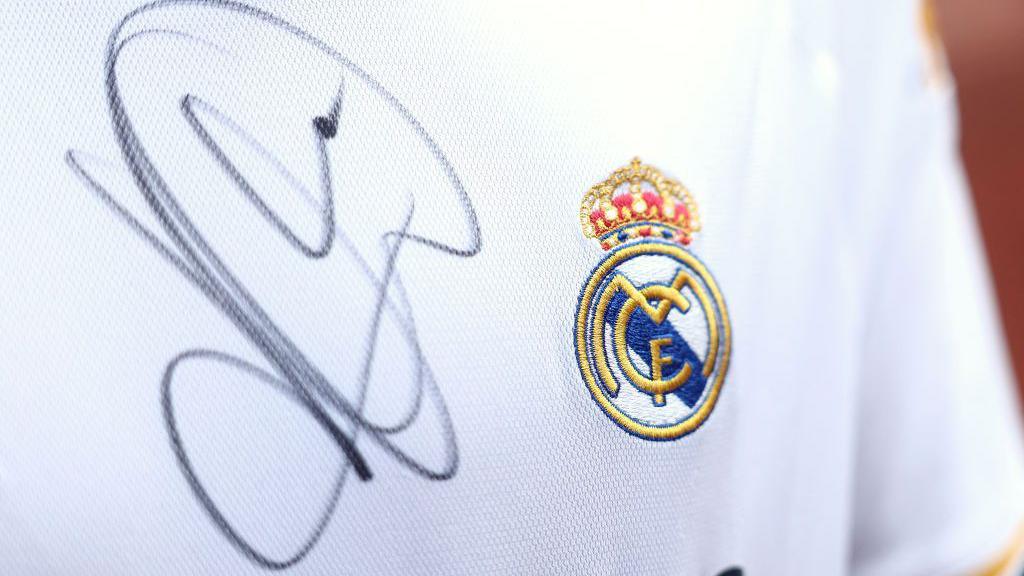
At the team's practice facility. While stopped at an intersection. While filling up at a gas station. In a hotel lobby. Outside their family home.
The places where footballers and managers are approached for autographs range from the mundane and understandable to the invasive and inappropriate.
Importantly, there exists a pair of different types of autograph seekers. There are the genuine fans seeking a memento to treasure for a lifetime, but also commercial dealers amassing a collection of items to be listed for sale on the internet.
The individuals earning an income from sourcing autographs are often experienced figures who approach athletes with organised packs of shirts and pictures, aiming to get as much signed as possible in a brief moment.
But what do the players being approached feel, and are some of these encounters becoming excessive?
In What Ways Do Signature Seekers Engage With Celebrities?
When a prominent coach was filmed declining to sign a shirt after a individual accosted his vehicle recently, he justified his actions against a counter-reaction by stating he felt "vulnerable" and claimed some "fans do not act for the right reasons".
In another instance, a celebrated manager angrily chastised a group of seekers who approached him in a car park close to his residence, lambasting their profession and stating, "Do not return - This is my final warning. What do you aspire to?"
The sports memorabilia industry is estimated to be worth billions of dollars globally each year, highlighting the substantial wealth professional hunters can earn by regularly seeking out celebrities.
Clubs sometimes have to intervene and safeguard players, including prohibiting professional hunters from operating outside training grounds, deploying protection personnel at nearby petrol stations where hunters know players pause, and in certain instances helping escort them home.
One well-known player was recorded instructing hunters to cease trailing him to his house after they had engaged in this on back-to-back days.
And earlier this month, a backline player was caught on video comically scribbling half-hearted autographs on a set of shirts given to him by a seeker who came up to him at his vehicle's window.
"Athletes become extremely annoyed with it," says a ex-top-flight champion.
"I've encountered it on many occasions. They stand outside the TV studio and request that I sign a dozen matching jerseys all at once. I challenged it recently and said 'you're going to sell these online, correct'?"
"It is incredibly irritating that the purpose is to make money out of athletes. It's up to the individual to make a split-second decision in the moment."
"If we say no, then the spurned party will often insult the person who refused them and call them out them on social media."
"It's out of order as authentic autograph hunters must get fed up with these frauds who are acting for the wrong reasons."
"Such individuals spoil it for kids and genuine fans."

What Do Athletes Think About Commercial Dealers?
Most athletes are happy to brighten a supporter's day by spending a quick moment with them and signing an autograph.
But when frequent seekers show up, confrontations can happen, particularly if their conduct is perceived as aggressive.
"You get the people who are eager to get your signature but also want to have a short interaction with you and establish a personal link," notes a former England international. "That is perfectly acceptable, but then you also get the individuals that you see constantly."
"Some of them are quite savvy with the way they do it - they send their kids, or they arrive with friends."
"Instances have occurred when confrontations have taken place. I recall one where a guy attempted to argue with me - he would present you with 20 of the same card, and you would either refuse to sign the entire stack or your signature would become progressively weaker as it continued because you were aware he was going to sell them on."
In certain cases players can understand the motivation while not accepting discourtesy.
"He would openly tell you he was going to flog them, but in his eyes that would pay for his match tickets," the former player adds. "Most fans are truly polite and appreciative. They are never disrespectful until they don't get what they want."
Is a Portion of Genuine Fans Becoming Less Respectful?
Throughout the growth of women's football, fans have historically enjoyed more direct interaction to players than in the premier league. For the most part, those encounters are amicable, secure, and polite.
But some players feel interactions have become progressively less polite and disrespectful in recent seasons.
One national team player revealed she was approached for autographs by some of the same fans who had previously booed her during a game.
"It certainly appears to have been a change in the past few years - there feels to me more of a sense of entitlement with some fans now," says a former top-flight player.
"Supporters having greater proximity to players has been a key aspect of the uniqueness of the sport, and when I was competing we always aimed to be available for them," she explains.
"More recently, some people feel because they've paid for a ticket they are entitled to the time of the players before or after the game."
"No athlete wants to ignore the fans, but there are times and places, and potential security risks need to be taken into account."
"It requires reciprocal courtesy and it should be managed in a secure, regulated environment."
"It is essential to still have those moments so that young fans don't lose heart and think 'the players I admire are indifferent to me'."
Supporters Face the Danger of Purchasing Counterfeits On the Internet
Products signed by big stars and then listed online by dealers can sell for many thousands of dollars.
But not every piece of autographed collectibles bought will prove to be legitimate.
In certain instances, web shops are established by fraudsters who create fakes by purchasing products before adding a forged autograph - either by doing so themselves or employing the expertise of skilled signature forgers.
One reason fraudulent dealers can succeed in their schemes is because autograph verification is an unregulated process in many regions. Most items come with a certificate of authenticity, but that certificate is only as credible as the company which issues it, and those entities can be entirely unverified.
Several years ago, a individual was sentenced to prison after earning more than £1m from peddling fake


